.png)
.png)
B2B eCommerce Customer Journey Mapping for Wholesalers: The Playbook



Key Takeaways
- A B2B eCommerce customer journey map documents every stage a wholesale buyer goes through, from awareness to advocacy. It includes the touchpoints, pain points, and emotions related to each step.
- B2B buyer journeys are more complex than the B2C ones, as multiple stakeholders, longer sales cycles, and repeat orders come into play, making mapping essential for wholesale growth.
- Most journey maps stop at the first order, but in wholesale, customer retention is where the real revenue lives.
- Building a map requires real customer data, such as interviews and analytics. Regular updates keep it accurate as buyer needs evolve.
- A B2B eCommerce platform supports the customer journey across all these stages, removing friction for customers and giving you access to their purchasing behavior.
Most wholesalers and brands know their product inside out.
But that doesn’t mean they know what their B2B buyers actually go through, from first discovering them to placing a repeat order months later. That gap can cut deep: it’s where deals stall, and accounts quietly walk away. That’s exactly what a B2B eCommerce customer journey map reveals.
B2B wholesale is complex by nature, typically involving multiple stakeholders, long sales cycles, bulk and repeat ordering, account-specific pricing, and catalogs. Each of those adds a layer of expectation that B2B buyers carry through every interaction with your business and brand.
70% of B2B buyers already prefer digital purchasing, while manual-based operations hide costly inefficiencies. If you’re just starting out or already have a B2B portal, the buyer journey happens online, whether you map it or not.
This article shows how to build a B2B eCommerce customer journey map that reflects how your customers behave, so you can reduce friction, improve retention, and grow.
What Is a B2B eCommerce Customer Journey Map?
A B2B eCommerce customer journey map is a visual framework that documents every stage a buyer goes through, from discovering your wholesale business to becoming a loyal account with repeat purchases. It tracks all touchpoints, decisions, and friction points along the B2B buying process.
Unlike a sales funnel, which is a linear, business-focused tool aimed at converting leads into paying customers, a customer journey map zeroes in on how buyers actually behave before they even land on your wholesale website. Its purpose is to identify gaps in their experience and, ultimately, improve your B2B online ordering process. It draws on both hard data (drop-off rates, reorder frequency) and qualitative insights, like roles, pain points, and user feedback at every touchpoint.
The distinction matters more than most wholesalers realize. A business that grows and retains its accounts is the one that understands what it takes to get to that first (and second) order best. Sometimes this is more important than the product itself.
With a journey map, the buyer experience takes center stage.
Why Journey Mapping Matters More in B2B Than B2C
B2B buyers are 57% through their buying research before contacting sales. By the time someone reaches out to your sales team, they’ve already formed an opinion about your brand and products. If your digital touchpoints are weak, you may never get that email or phone call.
Here’s why buyer journeys matter more in wholesale:
- Multiple roles and touchpoints. In a B2C context, a single consumer makes a personal, often impulsive decision: they Google or ask their favorite AI tool, compare, and buy. The journey is short and linear.
B2B eCommerce purchasing is a completely different animal. Consider a manager at a regional home goods retailer reordering holiday accessories: they need to confirm product availability, check account-specific prices, get a budget sign-off from finance, and verify delivery timelines, all before placing a single order. That’s four stakeholders and multiple touchpoints for a single purchase. Plus, a wholesale buyer might go quiet for two weeks, introduce a new stakeholder, and restart the conversation from the beginning. A journey map makes this complexity visible and manageable, helping you speak to all of them at the right moment. - Convenience outweighs product satisfaction. A smooth experience during all these touchpoints is essential. Every unnecessary step in the buying process is a reason to go to a competitor: high-friction environments reduce the odds of a purchase by 43%. Plus, a McKinsey survey found that 65% of B2B buyers say they are likely to switch suppliers if they encounter hiccups in the ordering process. It’s especially acute in wholesale, where buyers often have established relationships with multiple suppliers and switch based on convenience rather than satisfaction, as consumers do.
- Repeat purchases are the real gold. In wholesale, customer retention and reordering are extremely valuable for revenue growth, whereas in consumer commerce, acquisition is a key goal. Journey mapping is one of the few tools that forces you to think about what happens after the first order.
- The self-service shift. Self-service portals have always been the default in B2C. But this shift is recently growing in B2B, with buyers now increasingly expecting to research, order, and manage accounts without needing to call anyone. In fact, it makes journey mapping even more crucial for B2B online ordering today.

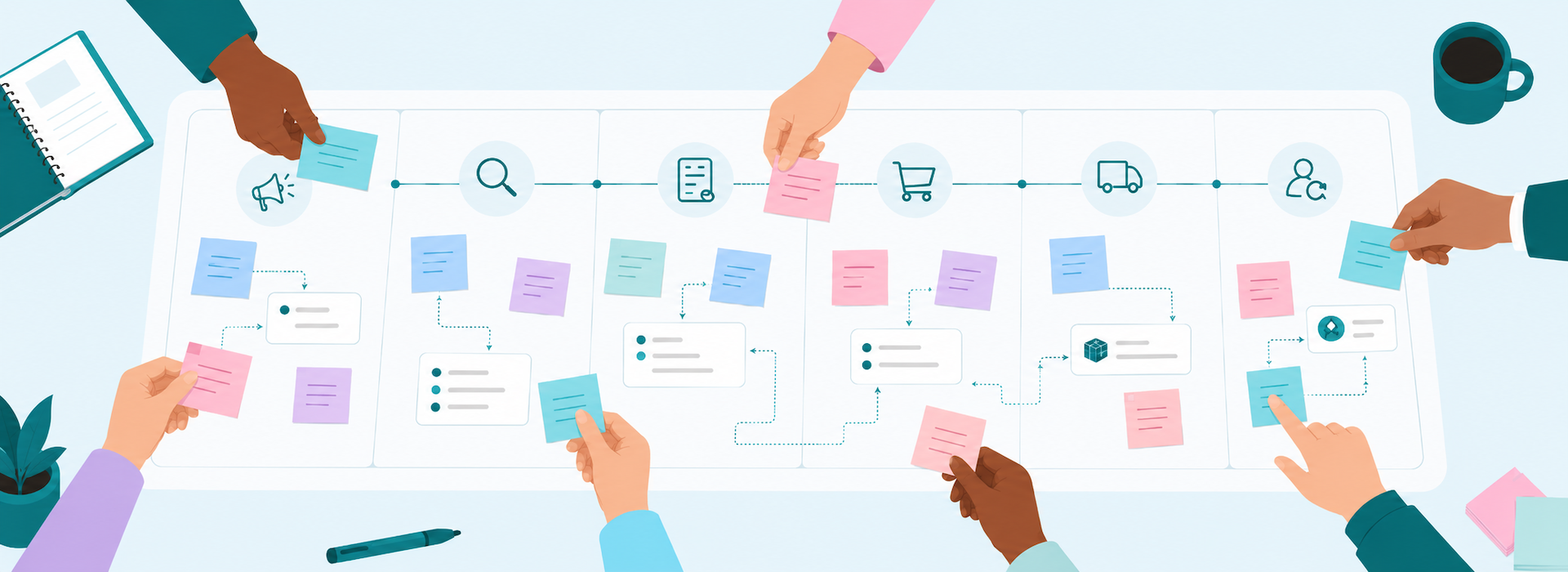
The 6 Stages of a B2B eCommerce Customer Journey
Every wholesale buyer goes through a journey before and long after placing their first order. Understanding these B2B buyer journey stages is at the core of growing and retaining accounts rather than constantly starting over with new ones.
Stage 1: Awareness
Awareness is about how buyers first encounter you. In wholesale, this starts with industry search queries, trade shows, and word-of-mouth from other retailers or distributors. It also includes physical and digital directories (e.g., Thomasnet, Alibaba, and RangeMe) and increasingly, other online touchpoints like Google and AI tools like ChatGPT, Claude, and Gemini.
For instance, a café owner looking to expand the types of blends they offer, types “wholesale specialty coffee supplier” into Google. The first touchpoint will be the results of that search: your blog, product pages, or customer reviews.
Stage 2: Consideration
The buyer has found you. The deep research phase begins, and it’s rigorous and detailed. Buyers are now reviewing what you offer and comparing you against two or three other wholesalers. They’re exploring your product catalog, looking for price ranges, even if prices are gated, and checking whether you can fulfill all their product requirements. They’re also actively looking for social proof: logos, customer stories, and reviews come into play.
What they need from you at this point is clear product information, easy catalog navigation, shipping policies and MOQs, and these trust signals that tell them you’re a reliable partner in the long term. They don’t want to waste time with a supplier or brand they’ll never order from again. At this stage, how you build your wholesale website matters as much as your collections do. A poor one means lost leads.
Stage 3: Decision
The buyer wants to move forward. But just when they think they’re close, there’s still another level to clear: budget approval, a manager sign-off, a final comparison with other vendors. B2B buying can get political: the person who researches the suppliers may not be the person who approves the spend.
What moves buyers through this stage: a frictionless account application and quick approval, clear pricing and payment terms, responsive communication from a sales rep, and the confidence that onboarding with you won’t be a project in itself.
Here’s where a complicated registration process or a slow quote response can quietly kill deals. Make it hard for buyers at this stage, and they won’t come back.
Stage 4: Purchase
The first order is a high-stakes moment. It sets the tone for the entire relationship, and in wholesale, first impressions matter as they often determine whether a buyer reorders. Is the ordering experience smooth? Is account-specific pricing showing up correctly? Can the buyer find what they need without calling support?
This is where your B2B eCommerce platform and B2B ordering workflow should earn the relationship. If the checkout is clunky or if buyers don’t get automatic order updates, you could easily undo everything you’ve built so far. Hatch Coffee, a coffee roaster, describes this upgraded experience simply: orders come in, shipments go out within days, and customers get immediate order updates without back-and-forth.
Stage 5: Retention & Reordering
Wholesale businesses win or lose in this stage. The first order is the beginning of the relationship. The ultimate goal is repeat orders, where the real revenue lives. However, most maps are built for conversion, but wholesale journey maps should be built for repeat revenue.
What facilitates reordering? Features like order history, quick reorder, saved orders, live product availability, and back-in-stock notifications. Add to this a sales team that anticipates buyer needs before they have to ask, and you have a winning combination. Buyers feel alienated when B2B online ordering feels like a chore, get slow responses, and they seem like another order number in a queue.
Stage 6: Advocacy
Satisfied wholesale buyers become your best sales channel. They recommend you to other retailers and distributors within their industry networks and leave honest reviews that new buyers actually trust. It is the most overlooked stage of the B2B eCommerce customer journey. And it’s the most underutilized, especially as product discovery these days happens in AI tools or Google AI Overview, which actually take these unique experiences into account.
A simple NPS survey, a review request, or a case study invitation at the right moment can generate organic warm leads. Happy buyers talk. Map this stage and let it work for you.
How to Build Your B2B eCommerce Customer Journey Map
Step 1: Define All Buyer Personas
Wholesale is a team sport, so you need to map the entire buying “committee,” not just a single buyer. For a typical retailer or wholesale distributor purchasing in bulk, this may be:
- the purchasing manager, who cares about SKU availability and prices,
- the finance manager or accountant, who cares about payment terms and invoicing
- the store manager/owner or operations lead, who cares about which brands and products will make it to their store, product availability, and delivery timelines.
Each persona has distinct needs at each stage of the B2B online ordering process. Your map needs to account for all of them.
Step 2: Gather Real Data
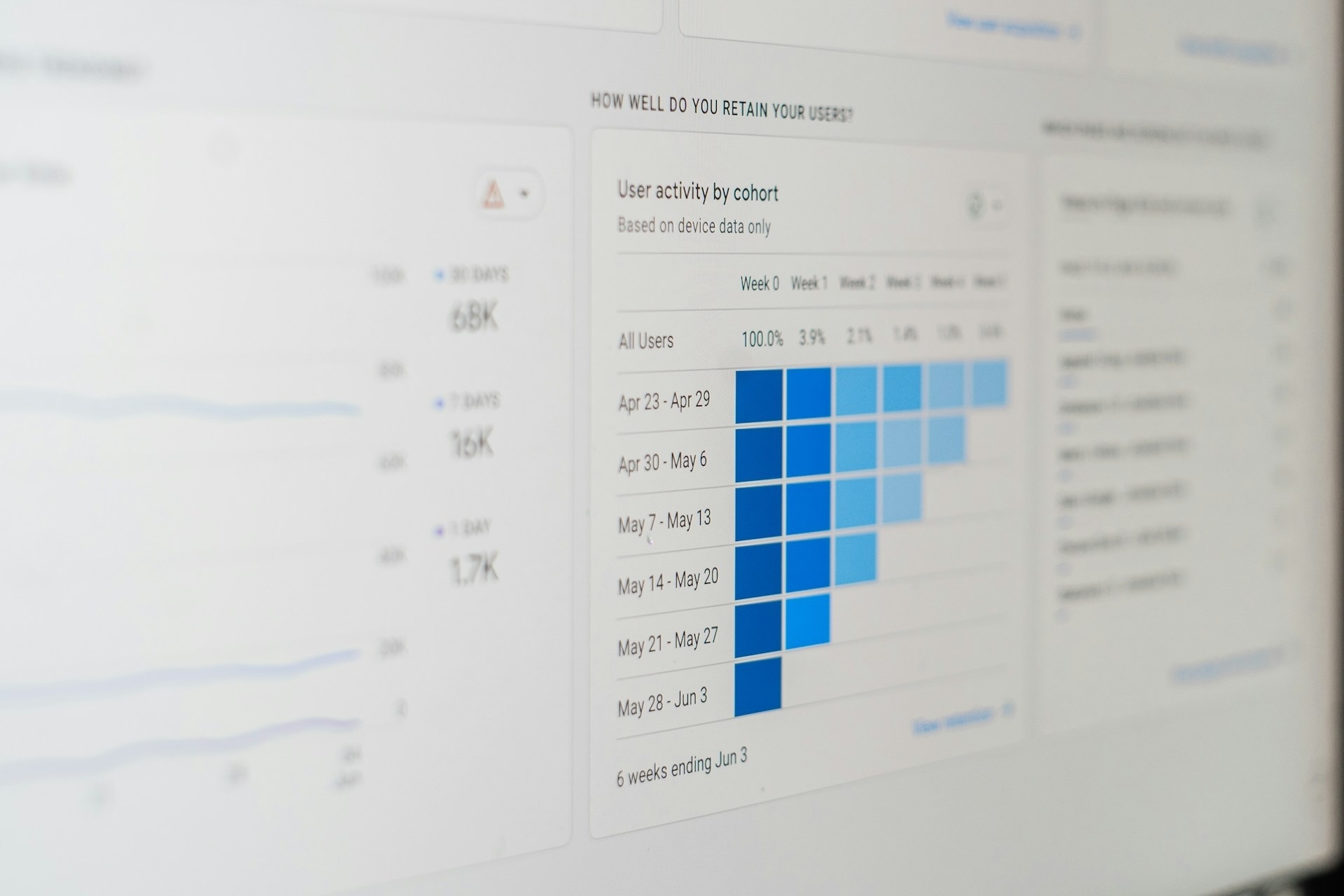
A good wholesale eCommerce customer experience relies on actually knowing what your buyers need. Don’t assume: Ask and do your research. Talk to select customers, dig into support ticket and CRM data, pull customer activity or sales reports, run post-purchase satisfaction surveys, and check your analytics to see reorder rates, where customers drop off, and what they engage with most. A journey map reflects what buyers do, not what your sales team thinks they do.
Step 3: List Every Touchpoint Across All Channels
Your website, product catalog, email sequences, sales rep calls, support interactions, order confirmations and updates, invoices, and reorder reminders. All of these are touchpoints between your business and your customers, and you need to catalog them. Note which of these are digital, which are offline and human, and which are underused, broken, or missing.
Step 4: Identify Friction Points and Drop-Offs
The heart of your journey map. You need to capture how your buyers feel at every touchpoint, understanding when they’re frustrated, happy, or feeling lost during the B2B buying process. Where do they stall? Where and when do they go silent? Where does your sales team spend the most time fixing problems? For example, missing how-to-order info, confusing or overly rigid minimum-quantity policies, and slow turnaround on quote requests could be significant pain points in your online experience. Your Step 2 data can clearly reveal these answers.
Step 5: Visualize and Share It
It’s time to get back to the drawing board – literally. The journey map needs to be visible to everyone on your team, from sales and support to operations. It doesn’t have to be fancy. Create the map in a tool your team actually uses: from a simple spreadsheet, a Figjam board, a simple presentation slide, or a Google doc. A map that lives only in your laptop has no value.
Step 6: Use it and Update It Regularly
Now it’s time to act on what you’ve documented: Assign owners to each touchpoint – these are the people responsible for identifying buyer friction. Set KPIs for each journey stage. Critically review your map every quarter or six months. Buyer behavior changes as their needs, your product mix, and your team or operations change, so your map needs to reflect those changes.
Common Mistakes Wholesalers Make When Mapping the B2B eCommerce Customer Journey
- Building from the inside out. Mapping how your internal process works instead of the real buyer experience.
- Stopping at the first sale. A complete journey map includes the reordering experience.
- Mapping only what works. Documenting the bumps in the ordering experience (e.g., shipment delays) is what allows you to improve your service and build customer loyalty.
- Treating it as a one-time project. An outdated journey map becomes a liability.
- Ignoring buyer personas. Understanding only how the primary contact behaves is like looking through broken glass: you miss the people who kill deals or determine repeat purchasing.
How Your B2B eCommerce Platform Shapes the Journey
A journey map is valuable as a tool, not a document to file away. And if you’re using a B2B eCommerce platform to take and manage orders, putting it to good use can enhance the customer experience at every touchpoint.
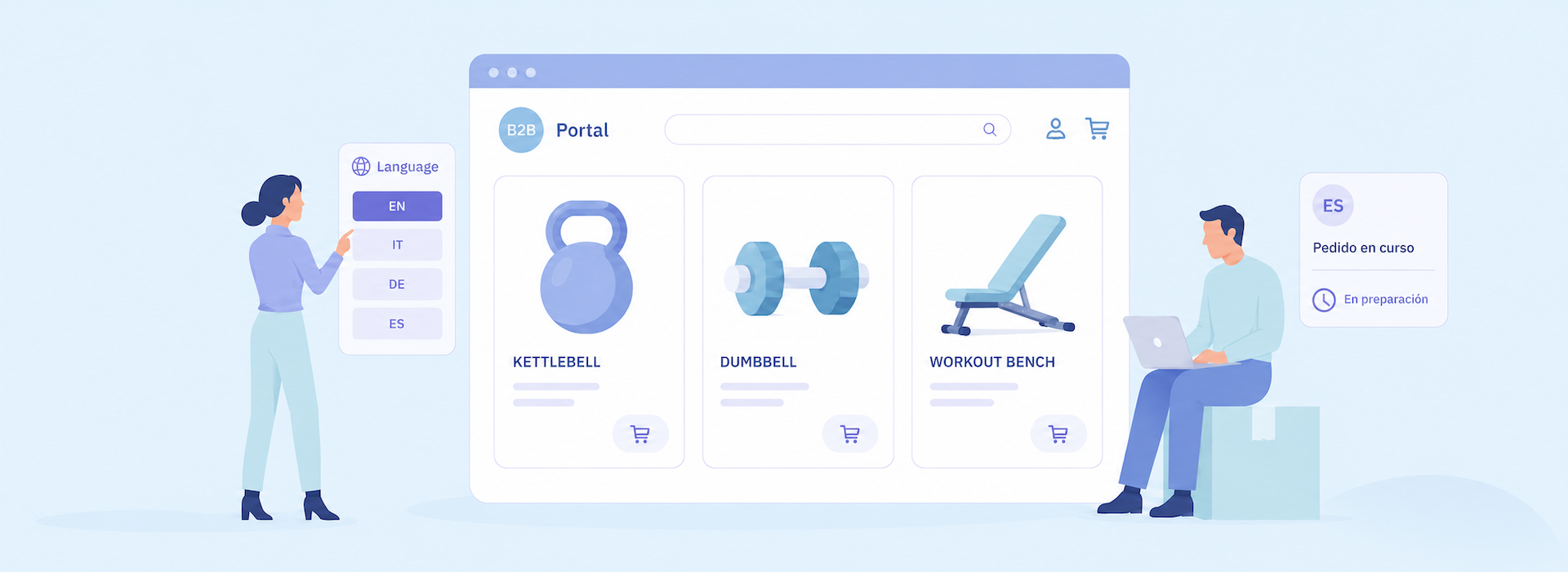
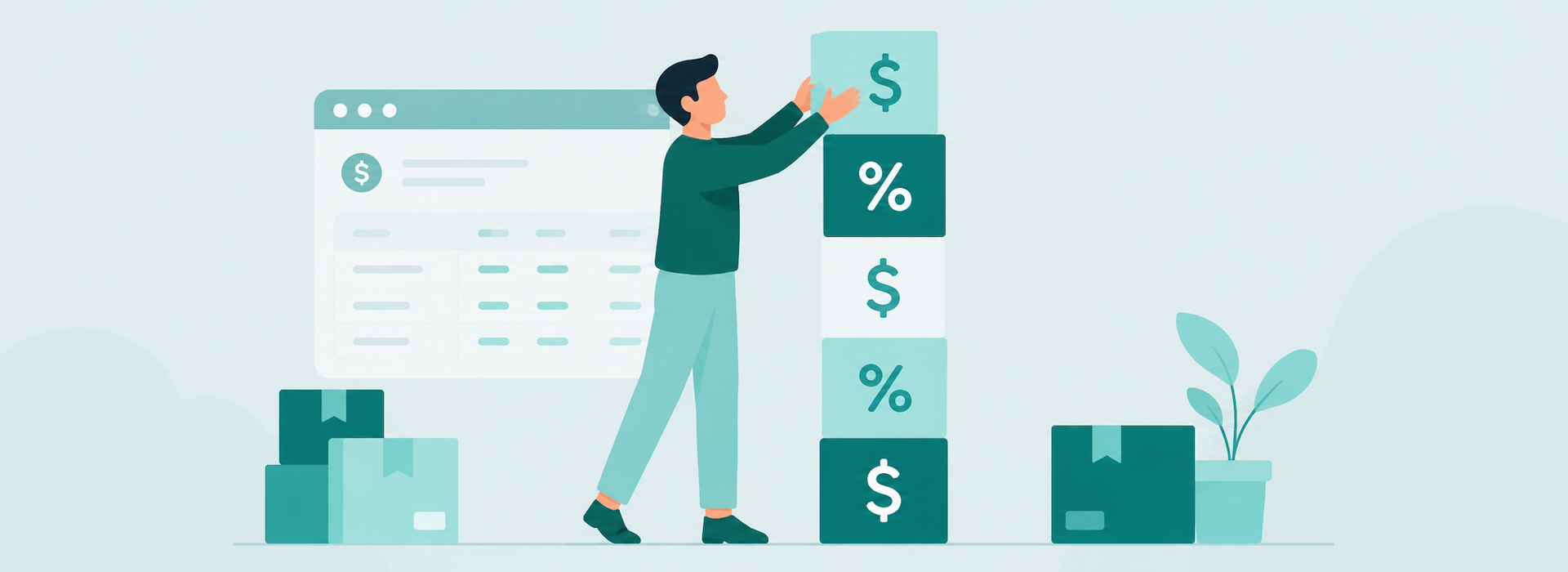
The right platform should support the journey across all stages: easy registration and approval, account-specific prices and discounts, and personalized storefronts for buyers in the consideration and purchase stages. Order updates, reorder history, product availability, back-in-stock notifications, unsubmitted order reminders, and sales rep tools for retention. Sub-customer profiles for accounts with multiple stakeholders, and reports that give you the data to assess buyer behavior and keep your map current.
Tradewinds, a UK outdoor equipment distributor, saw this shift firsthand. After moving to a self-service B2B portal, even their most hesitant buyers embraced the self-service model, processing 1,760 orders across 390+ users, within a year of launching on B2B Wave. As their logistics coordinator shares: “People are beginning to realize that it’s a much more foolproof way of placing an order and, as a result, are using it much, much more.”
Start With the Map, Then Fix What It Reveals
Like any map, a B2B eCommerce customer journey map isn’t the goal: the real gold lies in what the map reveals to you about your buyer behavior. Every pain point you can improve, and every emotion you can identify and understand, can surface a revenue opportunity without having to compete on price with other wholesalers.
Investing in building your maps is a strategic move: you can increase revenue for your wholesale business using data you already have. All you need to do is act on this insight. And on top of that, you get to make your customers happier and build stronger, more fruitful relationships with them that last.
If you want to see what a smoother buyer journey looks like in practice, request a demo with our team today.



.svg)

Join fast-growing B2B wholesalers, distributors, and brands who are automating their businesses.
No one does B2B eCommerce like B2B Wave. We’re fast, intuitive, error-free, and integrate with your current stack.
.svg)

.png)

.svg)