.png)
.png)
12 Benefits of B2B eCommerce Platforms


Updated on October 1, 2026.
Key Takeaways
- For B2B buyers, B2B eCommerce platforms enable 24/7 ordering, easier reordering, more transparency, and a more personalized buying experience.
- For wholesale operations, B2B platforms reduce order-entry mistakes, speed up processing, allow for connected systems, and improve inventory visibility; custom features can also support complex ordering workflows.
- For sales reps, time won back from admin tasks can be put back into selling and relationship management.
- B2B reporting can support better business decisions, while platform scalability can accommodate business growth.
Digital commerce among B2B businesses continues to grow.
According to McKinsey’s 2026 Global B2B Pulse Survey, 71% of B2B companies now offer eCommerce capabilities. Among those that do, roughly one-third (1/3) of revenue comes from these digital channels, making it one of the most essential sales streams for these companies.
The numbers are staggering, right? The COVID-19 pandemic changed the game for many B2B companies that switched to digital sooner than they planned. For wholesalers, the real question is what a B2B eCommerce platform can bring to the table for buyers and the teams handling their orders.
This article presents twelve compelling ways a wholesale eCommerce platform can benefit your business, across the customer experience, daily operations, and, of course, sales.
How Wholesale Buyers Benefit from B2B eCommerce Platforms
1. 24/7 Wholesale Ordering
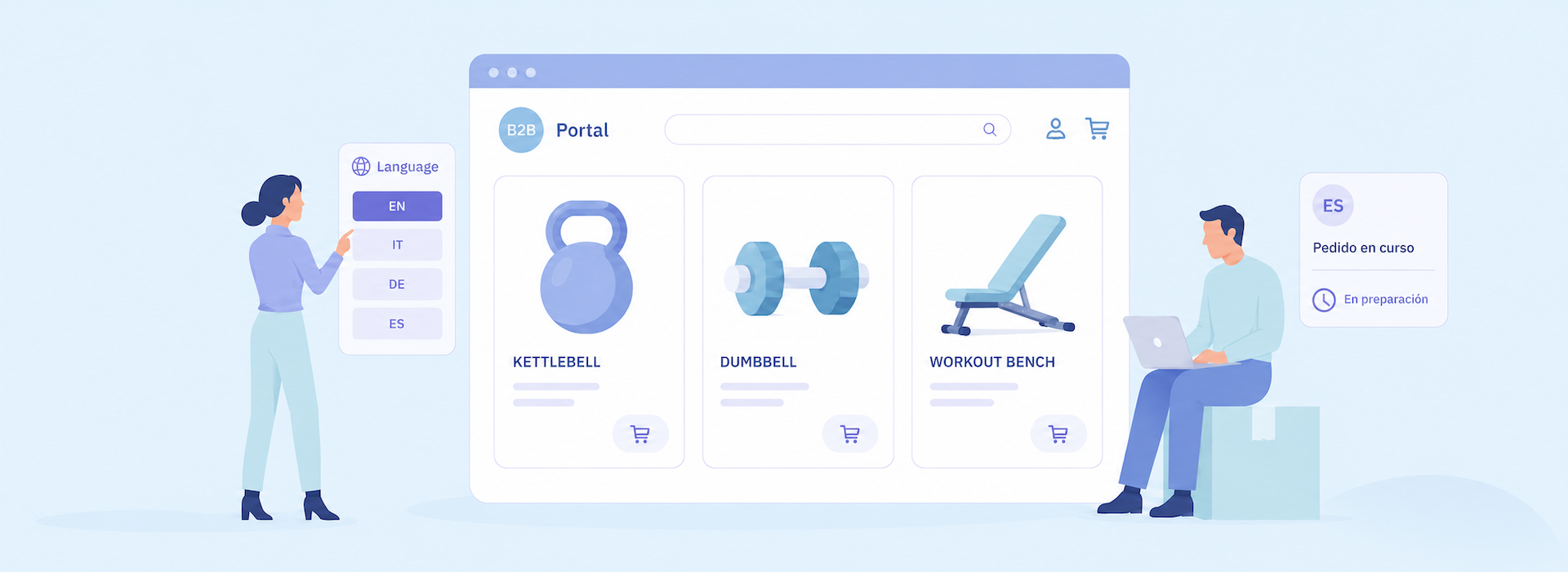
A wholesale website operates around the clock, outside your fixed opening hours. Your customers don’t need to call you to check product information or their prices. Instead, they easily access your B2B portal 24/7 from any device (laptop, tablet, smartphone), browse your catalog, check their pricing, and place an order when they want, even when they’re on the move. For example, a home decor retailer submits an order for area rugs and throw pillows on a Saturday afternoon, after they’ve closed their shop. You and your team can start working on this order right away on Monday morning.
2. Faster Ordering and Reordering
B2B eCommerce platforms empower buyers to manage their accounts directly, place orders, and view past orders without direct assistance. Most importantly, they make ordering easy and fast through quick order menus and re-order capabilities.
In action: A big-box retailer can easily look up familiar products and variants (e.g., protein powders in different flavors or sizes) by typing the name or SKU number, quickly add quantities, and place an order in a matter of minutes. Even better, if they routinely order the same protein powders, they can review their order history and start building a new order based on a past purchase by adding those items to their cart. Then they can adjust quantities and submit quickly.
3. A More Personalized Wholesale Buying Experience
It’s a truth universally acknowledged: one size doesn’t fit all, especially in wholesale. A wholesale eCommerce platform lets you craft personalized experiences for buyers, relevant to their needs and your specific agreements with them.
A buyer logs into your B2B ordering portal and, on your homepage, sees new drops, promotions, or special offers you’ve designed for them, followed by their favorite products and personalized suggestions based on what they like to order. They see a highly curated catalog with only the products, brands, or categories you want them to browse. For example, Hatch Coffee uses privacy groups to limit specific products, like oat milk, to certain buyers and control pricing across wholesale accounts.
When it’s time to order, they see the prices and targeted offers tied to their account. At checkout, they can select the shipping and payment options available to them, without rummaging through a long list. Ultimately, buyers get a better ordering experience: they can quickly find products relevant to them and see their agreed prices and discounts without having to ask you which terms apply.
4. Access to Order History, Automated Updates, and In-Portal Messaging
A buyer may have placed an order, but their questions or requests don’t stop there: Has the order been confirmed? Has it shipped? And what about that coupon code they forgot to type in? A B2B eCommerce platform lets them check their order history and current status through their account profile in your portal.
At the same time, automated order update emails keep them in the loop as it moves forward so that they can follow it every step of the way. Portal notifications also flag status updates and replies to order messages, so they can see what’s new when they log in. If an order status leaves questions unanswered, many solutions allow wholesale teams and buyers to send messages about their orders directly through the portal. All these conversations stay attached to each order instead of lingering across scattered emails in your inbox.
Together, these tools allow customers to track an order on their own and contact you when they really need an answer.

How B2B eCommerce Platforms Improve Wholesale Operations
5. Fewer Order-Entry Mistakes
What happens when an order arrives by email or phone? Someone on your team has to key it in, copying product codes, quantities, and prices into a spreadsheet or another system. Every time they need to re-enter these details, another mistake in the product’s quantity or code is just around the corner.
A B2B eCommerce platform lets buyers submit orders directly and, as a result, reduces data-entry mistakes. Your team can work from the submitted order instead of retyping from an email, notepad, or form.
Manual entry into spreadsheets and QuickBooks became time-consuming and prone to errors for Coterie White, prompting the team to look for another system. Its co-founder says their B2B platform tackled cumbersome email chains and manual handovers, as they didn’t have to enter orders more than once, therefore reducing the chance of human error.
6. Quicker Wholesale Order Processing
With your B2B eCommerce platform capturing orders directly from your online store, your team can start processing them sooner. A team member can review new orders in the portal, update their status, and message customers for clarifications directly from your B2B platform. Your warehouse team can check for specific order statuses (e.g., Being Prepared or In Fulfillment) and start picking and packing the order.
All this can shorten the time between a buyer placing an order and sending it out the door. Wipro reports that automation can reduce sales-order cycle times by more than 46%, based on APQC research.
7. Clearer Stock Visibility for Buyers and Staff
Automating order processing is one thing. The great thing about B2B eCommerce portals is that you can also connect them to your inventory management system. This benefits both your team and customers. How? As they handle orders, your sales and operations teams can see which products are available, which items are running low, and their quantities. They can use that information to plan what to replenish and what to tell buyers.
Displaying current availability on your B2B store helps buyers decide what to order, too. What can they pre-order? What can they get their hands on now? Tradewinds uses product status labels to keep clients satisfied and help them make the right call. An “Available” label points to a quick turnaround, while a “Low Stock” one may drive them towards ordering similar products (e.g., the same work boot in another color).
8. Fewer Duplicate Updates Across Business Systems
B2B businesses often use multiple systems to effectively manage their orders and diverse tasks, like accounting and inventory. If someone has to enter the same details in each one, a single order creates several rounds of data entry. Connecting your B2B eCommerce platform to those systems lets order information move where it’s needed, without multiple manual updates.
Think of a hardware distributor that has connected their ERP and accounting software to their portal. Customers place their orders, and the details flow into the ERP, which their team uses to manage order processing. When the team moves an order to the right status, their accounting system generates an invoice that the customer can receive via email and view on the order’s page in the portal. With everything connected, you don’t have to update each system separately.
9. Support for Custom Wholesale Ordering Workflows
Every business is unique and one-of-a-kind. Most B2B platforms are versatile and adapt to your industry’s and business’s ever-evolving needs for order taking and processing, including custom integrations and features.
Ella B. Candles worked with B2B Wave to develop a custom Build-A-Candle feature that lets customers create their own candles by selecting from available scents, bow colors, and labels, without navigating their extensive product catalog. Previously, buyers sent orders with intricate details by email or phone. If they mixed up any of these (e.g., a mismatched bow color and scent), the team had to follow up. This functionality not only makes order-taking easier, but also “decreases the chance of a customer making a mistake, saving time from our end,” as Shane Eubank, Automation Engineer at Ella B. Candles, shares.

How B2B eCommerce Platforms Support Sales and Business Growth
10. More Time for Sales Reps to Sell
It’s time for a tale of two sales reps. The first one, John, works for a business that has digitized little of its wholesale ordering. John spends part of his time selling and part of it cross-referencing SKUs and following up with customers about order details or status.
The other sales rep, Jane, uses the company’s B2B portal to review the orders placed directly by her customers. She spends less time retrieving order history data or updating buyers on their order status because they can review this themselves in the portal. As orders are all recorded in one place, she can see what her customers buy and make more targeted suggestions. Consequently, Jane has time to spare from desk duty, so she can visit clients, set up Zoom calls, or spend more time on the phone with them.
The moral of the story? B2B eCommerce platforms can really transform sales reps’ daily workflow, especially as your business grows and manual procedures take a toll on your team. Hatch Coffee also saw a real result: their team revived regular in-person visits with buyers after rolling out their B2B portal.
11. Better Decisions with B2B Reporting
A wholesale eCommerce platform gathers data to generate rich reports and valuable insights into customer behavior, product preferences, order volume, and inventory turnover. This data can become a golden roadmap to success, guiding B2B companies to analyze order patterns, forecast product trends, or monitor discount performance.
Which products do your buyers order again and again, and which are falling behind? What results are your promotional coupons bringing in? What are your customers browsing in your B2B store? Your team can interpret this information and act on it. For instance, if a buyer orders less frequently and their order value has declined in the past six months, your team can reach out to that customer immediately. Then, based on that conversation, they can come back with more relevant suggestions, downselling opportunities, or a targeted discount.
12. Scalability for Business Growth
Most B2B eCommerce platforms can accommodate the needs of a growing business or a company experiencing seasonal fluctuations in product demand. A holiday decorations wholesaler may see a surge in orders during Halloween or Christmas, but can still manage that higher volume through its existing ordering setup.
Over time, the holiday wholesaler may start selling to other states. Their software should follow the business’s growth and support more regions, more customers, and more sales reps. Keeping their current B2B eCommerce portal as they expand means they don’t have to move customers and the ordering process to a new system.
Which Benefits Matter Most for Your Wholesale Business?
Online wholesale platforms empower buyers to manage their accounts directly, place orders, and access order information without direct assistance. They help wholesale teams save time on mundane tasks, so they can focus on optimizing their operations and scaling up. Of course, there are challenges to plan for when adopting a B2B eCommerce platform.
For a wholesale business still hesitant about digitization, the key considerations are these: What are your biggest blockers right now? Which capabilities could help you overcome them?
If you’re still figuring things out, request a demo today and explore how we can help you address the bigger challenges in your business.



.svg)

Join fast-growing B2B wholesalers, distributors, and brands who are automating their businesses.
No one does B2B eCommerce like B2B Wave. We’re fast, intuitive, error-free, and integrate with your current stack.
.svg)

.png)

.svg)